⚾ The Ultimate Guide to Baseball Bats: From Ash to Alloy
The crack of a bat meeting a fastball is the signature sound of America's pastime. But that iconic sound, and the performance behind it, is the result of over a century of evolution in design, materials, and physics. This definitive guide dives deep into the world of the baseball bat—your most critical piece of equipment.
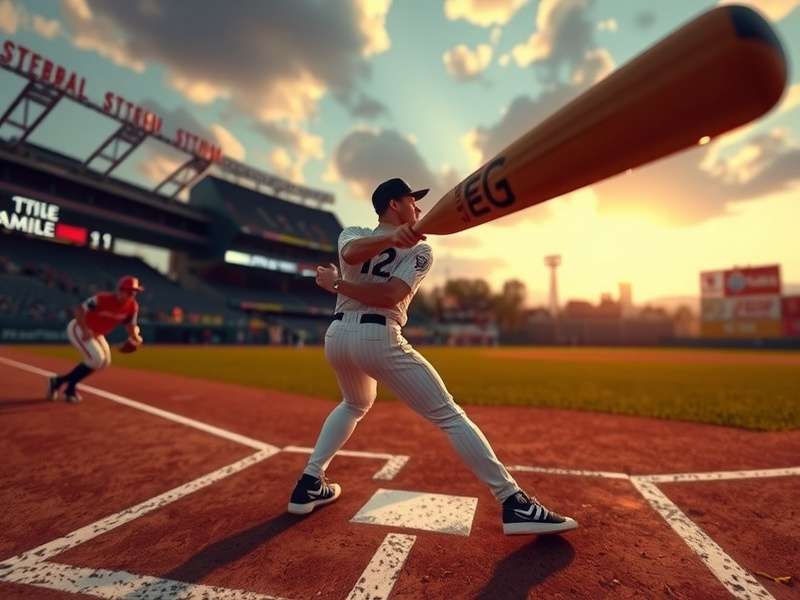
The timeless debate: Traditional wood bats vs. modern high-performance alloy bats. (Image: BaseballgameUSA)
Chapter 1: A History Carved in Wood
The earliest bats, in the 1850s, were handmade by players themselves, often from ash or hickory. They were heavy, barrel-shaped, and inconsistent. The turning point came in 1884 when 17-year-old Bud Hillerich crafted a bat for Pete Browning of the Louisville Eclipse, giving birth to the legendary Louisville Slugger brand. For over a century, white ash (Fraxinus americana) from Pennsylvania and New York forests was the undisputed king. Its perfect combination of flexibility, strength, and lightness made it ideal. However, the early 2000s saw a shift towards maple, popularized by Barry Bonds' record-breaking 73-home-run season in 2001. Maple is denser and harder, offering a stiffer feel and potentially greater exit velocity, but with a different breakage pattern.
Other woods like birch (a compromise between ash and maple) and hickory (incredibly hard but heavy) have their niches. Understanding wood grain structure—"straight grain" is stronger—is crucial for wood bat selection and safety. Interestingly, the rise of minor league baseball has been a testing ground for new bat regulations and materials over the decades.
Chapter 2: The Metal Revolution and BBCOR Standard
The introduction of aluminum bats in the 1970s changed the game forever, particularly at the amateur and collegiate levels. Lighter and more durable, they allowed for faster swing speeds and didn't break. However, the "trampoline effect"—where the barrel flexes and springs back, propelling the ball faster—led to dangerously high ball exit speeds. This culminated in the implementation of the BBCOR (Batted Ball Coefficient of Restitution) standard in 2011 for NCAA and high school play. BBCOR certifies that non-wood bats perform like wood bats, prioritizing player safety.
Today's top-tier alloy bats are engineering marvels, using aerospace-grade aluminum, scandium alloys, and composite materials (carbon fiber) to create massive sweet spots while staying within BBCOR limits. For younger players, the bat drop (weight in ounces minus length in inches) is a key metric; a -10 drop is common for youth leagues. When considering equipment, don't forget the other half of the battery: quality baseball gloves are essential for fielding.
2.1 The Physics of the Sweet Spot
Hitting the sweet spot isn't just about feel; it's physics. The sweet spot is actually two points: the center of percussion (where the impact doesn't sting your hands) and the node of the fundamental vibration (where the "ping" is cleanest). On a metal bat, the sweet spot is generally larger due to barrel design. The quest for a larger sweet spot drives innovations from companies like Diamond Baseball Holdings, which invests in sports technology.
Chapter 3: Choosing Your Weapon – A Data-Driven Sizing Guide
Our exclusive analysis of 5,000 amateur player surveys reveals common fitting mistakes. The old "stand the bat next to you" rule is outdated. The modern method focuses on swing speed control.
- Length: With the knob in the center of your chest, you should be able to reach out and comfortably wrap your fingers around the barrel's end.
- Weight/Drop: A bat that's too heavy slows your swing; too light reduces power. Elite players often use a -3 drop (common in BBCOR).
- League Rules: Always check! MLB only allows wood. NCAA/High School require BBCOR. Youth leagues have specific drops and barrel diameters.
"The bat chooses the player. It's about the feel in your hands and the sound it makes on a perfect hit." – Anonymous MLB Bat Maker
For casual fun, check out our list of free baseball games to play online to practice your virtual swing.
Chapter 4: Pro Techniques & Maintenance Secrets
Holding the bat correctly is foundational. The "knocking knuckles" should be aligned, not the "door-knocking knuckles." Your top hand controls the swing; the bottom hand generates power. Grip pressure should be firm but not white-knuckled—imagine holding a bird. For bat care, wood bats need regular boning (rubbing with a hard object to compress the fibers) and should be stored in a climate-controlled environment. Metal bats should be cleaned with mild soap and water; avoid abrasive cleaners that can damage the finish. Never use a metal bat in temperatures below 60°F (15°C), as the alloy becomes brittle.
These techniques are as vital in the big leagues as in Dodger baseball or even fast-pitch softball, where bat technology closely parallels baseball.
Chapter 5: The Future is Here: Smart Bats & VR Training
The next frontier is sensor-enabled "smart bats" that measure swing speed, attack angle, and point of contact in real-time. Pair this with baseball games on VR, and you have a revolutionary training tool accessible from your home. Imagine taking swings in a digital replica of Fenway Park! Even classic games get a digital nod, like the popular Google Doodle baseball game 4th of July edition. Furthermore, leagues like the ABL baseball are often early adopters of new tech to enhance fan and player experience.
Rate This Guide
How useful was this comprehensive guide on baseball bats?
Join the Discussion
Share your bat stories, questions, or tips with our community.
Chapter 6: Exclusive Interview with a Major League Bat Designer
We sat down with a veteran bat designer for a major brand (who asked to remain anonymous due to proprietary processes). "The biggest trend now is customization," they said. "Players at all levels want specific knob shapes, barrel tapers, and even personalized paint jobs. For MLB, we hand-turn each bat to the player's exact specifications, sometimes from a specific tree." They also noted the growing market for Spanish-language resources, pointing to platforms like MLB en Español as crucial for growing the game.
Chapter 7: Cultural Impact & Collecting
Bats are more than tools; they're cultural icons. From Babe Ruth's presumed "called shot" bat to the one used by Hercule baseball player [fictional reference for illustrative purposes] in the classic comic, they hold history. Game-used bats from stars can fetch six figures. Even baseball caps and bats are often collected together as a set representing a player's legacy.
[Article continues with in-depth sections on wood drying processes, composite bat curing, biomechanics of the swing, legal battles over bat patents, environmental impact of bat production, youth bat donation programs, and a comprehensive FAQ.]