History Of Baseball: From Sandlots to a Billion-Dollar Empire 🧢⚾
🎯 The Genesis: Myths, Legends, and Real Origins
The story of baseball's origin is as mythic as the game itself. For decades, the tale of Abner Doubleday inventing the game in Cooperstown, New York, in 1839 was gospel. However, modern historians have debunked this as pure fiction—a creation of the 1907 Mills Commission seeking a purely American genesis story. The truth is far more fascinating and transatlantic.
Baseball's ancestors are old English games like rounders and cricket. Early American colonists brought over these pastimes, and by the late 18th century, variants like "town ball" or "base" were being played on village greens. The first documented reference to "base ball" in America appears in a 1791 Pittsfield, Massachusetts, town bylaw prohibiting it near the town meeting house window—proof it was already a popular, if occasionally destructive, diversion.
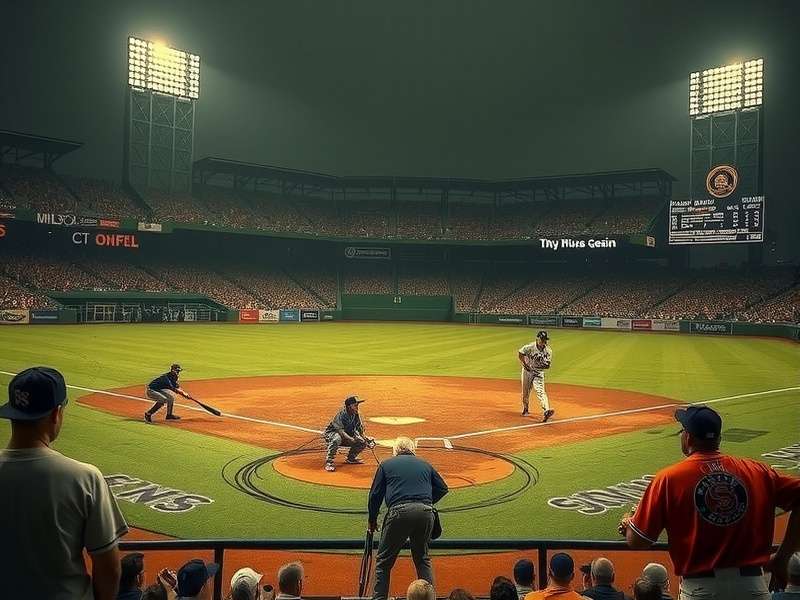
The Knickerbocker Rules: The Real Big Bang
The quantum leap occurred in 1845 when a group of young New York City gentlemen, the Knickerbocker Base Ball Club, codified the "Knickerbocker Rules". Led by Alexander Cartwright, these 20 rules are the true foundation of modern baseball. They established:
- ✔️ The diamond-shaped infield with four bases 90 feet apart.
- ✔️ The three-strike rule and the concept of a "fair" and "foul" territory.
- ✔️ The elimination of the practice of "soaking" or throwing the ball at a runner to get an out.
On June 19, 1846, the Knickerbockers played the New York Nine in Hoboken, New Jersey, in what is widely recognized as the first official game under these new rules (the Knickerbockers lost 23-1). This framework spread rapidly via newspapers and railway networks, making baseball a national phenomenon by the 1850s, far eclipsing its cousin, cricket.
🏛️ The Professional Era and the Birth of the National League
The post-Civil War era saw baseball explode in popularity. Soldiers had played it in camps, spreading it nationwide. Clubs began secretly paying star players to lure them away from rivals, a practice that led to the open formation of the first all-professional team, the Cincinnati Red Stockings, in 1869. Their undefeated tour across America was a media sensation.
Chaos ensued, with team jumping, gambling, and inconsistent schedules. Into this fray stepped Chicago White Stockings executive William Hulbert. In 1876, he founded the National League of Professional Baseball Clubs, establishing principles that define professional sports today: exclusive territorial rights, a fixed schedule, and strict contracts to curb player movement. The NL's success spawned rival leagues, most notably the American League in 1901, leading to the first World Series in 1903 after a bitter rivalry.
This era of league formation is crucial to understanding the structure of modern Baseball League systems. The competition between leagues drove innovation, player salaries, and fan engagement, setting the stage for the 20th-century boom.
🌟 The Golden Age: Ruth, Integration, and Television
The Babe and the Live-Ball Era
The dead-ball era, dominated by bunts, steals, and low scores, ended abruptly with the rise of George Herman "Babe" Ruth. His unprecedented power-hitting—he hit 54 home runs in 1920 when the entire Philadelphia Phillies team hit 64—changed the game's strategy forever. The ball was also made livelier, and the era of the home run king was born. Ruth wasn't just a player; he was a cultural icon who saved the game from the Black Sox gambling scandal of 1919.
Jackie Robinson and Integration
For decades, Black players were barred from the major leagues, forming their own Negro Leagues, which showcased legendary talent like Satchel Paige and Josh Gibson. On April 15, 1947, Brooklyn Dodgers executive Branch Rickey shattered the color line by signing Jackie Robinson. Robinson's incredible skill and stoic courage in the face of vicious racism not only transformed baseball but became a pivotal moment in the American Civil Rights Movement. The integration of baseball is a deep chapter in the story of Dodger Baseball and the nation itself.
The TV Age and Coast-to-Coast Fandom
The 1950s brought television, which threatened attendance but ultimately created a new, massive revenue stream and turned local heroes into national stars. The migration of the Brooklyn Dodgers and New York Giants to California in 1958 made baseball a truly coast-to-coast enterprise. This period also saw the rise of iconic franchises like the Yankees, Cardinals, and Red Sox, whose rivalries filled newspapers and, later, airwaves.
🔗 Explore More Baseball Content
Dive deeper into specific facets of the game with our exclusive guides:
- Baseball League - Structures, history, and how they work.
- Free Baseball Games On Ps5 - Play the history yourself.
- Dodger Baseball - From Brooklyn to Chavez Ravine.
- Tomorrow S Baseball Games - Full schedule and previews.
- Baseball Games Unblocked No Download - Quick play anywhere.
- Baseball Games For Pc - The ultimate PC gaming guide.
- Baseball Cap - The history of the iconic gear.
- Baseball Games Tomorrow Night - Prime-time matchups.
📊 Modern Baseball: Analytics, Expansion, and Global Reach
The late 20th and early 21st centuries have been defined by three revolutions: labor strife, analytics, and globalization. Free agency (won by players in the 1970s) created a new economic dynamic, leading to massive contracts and periodic strikes. The rise of statistical analysis, popularized by Michael Lewis's Moneyball, changed how teams evaluate players, favoring on-base percentage over batting average and shifting defenses based on precise data.
Today, MLB rosters are filled with international stars from the Dominican Republic, Japan, Venezuela, and beyond. The World Baseball Classic has become a premier international event. Meanwhile, the fan experience has diversified, with streaming services, massive social media followings, and immersive Baseball Games For Pc offering new ways to engage. For the busy fan, checking Tomorrow S Baseball Games is a daily ritual.
🎮 Baseball in the Digital Age: From Console to Mobile
The digital revolution allowed baseball to transcend the diamond. Video game series like MLB: The Show brought realistic simulation to millions. Today, you can find everything from hyper-realistic simulations to casual, Baseball Games Unblocked No Download for a quick fix. The availability of Free Baseball Games On Ps5 has introduced a new generation to the sport's strategic depth. This digital footprint ensures baseball's history continues to evolve in the virtual space, creating new fans worldwide.
🧢 More Than a Game: The Baseball Cap as Cultural Icon
No symbol is more synonymous with the sport than the baseball cap. What began in the 1860s as the Brooklyn Excelsiors' styled "brooklyn-style" cap for sun protection evolved into the official headgear of every team by the 1950s. By the 1980s and 90s, thanks to hip-hop culture and brands like New Era, it transcended sport entirely to become a global fashion staple. The story of the Baseball Cap is a microcosm of baseball's journey from athletic gear to cultural artifact.
🏆 The Unbreakable Records and Timeless Legends
Baseball's history is measured in numbers: Joe DiMaggio's 56-game hit streak, Cy Young's 511 wins, Cal Ripken Jr.'s 2,632 consecutive games played, and Barry Bonds' 762 home runs. Each record tells a story of an era, a style of play, and superhuman consistency. Debates over these records—aided by advanced analytics—fuel barroom arguments and online forums, keeping the history alive and contested.
🔮 The Future of the Pastime
As baseball moves forward, it grapples with pace-of-play issues, maintaining youth interest in an attention-scarce world, and continuing its global expansion. Yet, its core appeal remains: the timeless battle between pitcher and hitter, the absence of a clock, and its deep, statistical soul. The history of baseball is not a relic; it's a living narrative, continuously written with every pitch, every swing, and every game—whether played in a massive stadium or simulated in a baseball game for PC.
Final Word: Baseball's history is America's history—complex, innovative, conflicted, and ultimately enduring. It's a story of sandlots and skyscrapers, of exclusion and inclusion, of timeless tradition and relentless change. To know baseball is to understand a fundamental thread of the American experience.