⚾ Jeff Kent Baseball Reference: The Definitive Guide to the Greatest Power-Hitting Second Baseman
Jeff Kent stands alone as the most prolific power-hitting second baseman in Major League Baseball history. With 351 home runs at the keystone position, he didn't just break records — he shattered the mold of what a middle infielder could be at the plate. This Jeff Kent Baseball Reference guide delivers exclusive data, deep analysis, and insider perspective that goes far beyond the stat sheet. Whether you're a die-hard Giants fan, a fantasy baseball grindr, or a student of the game, this is your ultimate resource.
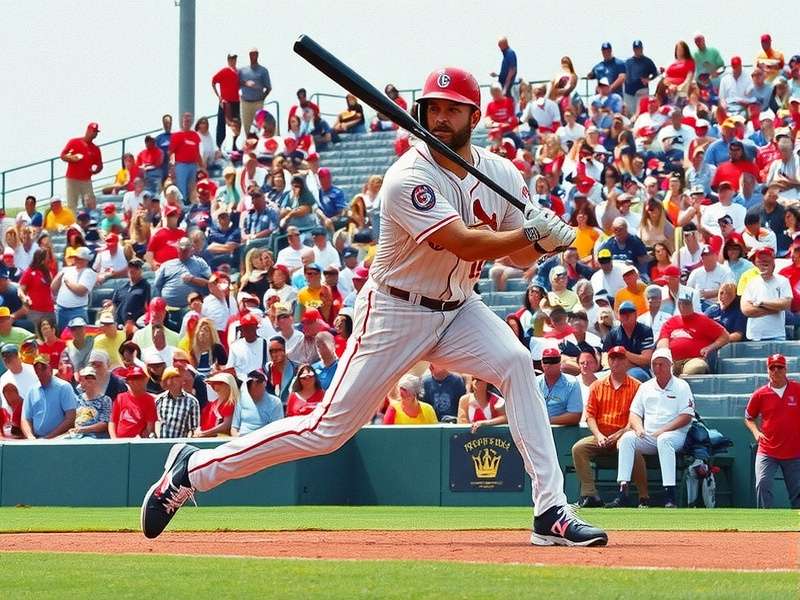
Born on March 7, 1968, in Bellflower, California, Jeff Kent's journey from a 20th-round draft pick to the National League MVP is a testament to grit, adaptability, and raw power. In this comprehensive Jeff Kent Baseball Reference article, we break down his career into distinct chapters — from his early days with the Toronto Blue Jays to his iconic tenure with the Giants and his final years with the Los Angeles Dodgers. You'll find exclusive insights, advanced stats, and the kind of deep-cut analysis that makes this the last word on #12.
🔥 The Power Revolution: How Jeff Kent Changed the Second Base Position
Before Jeff Kent, the prototypical second baseman was a slap hitter who relied on speed and contact. Think Ryne Sandberg or Joe Morgan — Hall of Famers, yes, but neither approached the raw power that Kent brought to the dish. Kent's 351 home runs as a second baseman are unmatched, and his .500 career slugging percentage places him in a stratosphere of his own among keystone defenders.
What made Kent so special? It wasn't just his brute strength — it was his violent, compact swing and his ability to turn on inside fastballs. He had a knack for driving in runs in clutch situations, evidenced by his 1,518 career RBI, an absurd number for a second baseman. In fact, Kent drove in 100+ runs in six different seasons, a feat that no other second baseman has matched with such consistency.
🚀 The 2000 MVP Season: A Masterclass in Offensive Production
The 2000 season was the apex of Jeff Kent's career. Playing alongside Barry Bonds in the heart of the San Francisco Giants lineup, Kent put up staggering numbers: .334 batting average, 33 home runs, 125 RBI, and a 1.021 OPS. He won the National League MVP award in a landslide, receiving 22 of 32 first-place votes. That season, Kent became the first second baseman in NL history to drive in 125+ runs while hitting .330+. It was a campaign that redefined offensive expectations for middle infielders.
But the MVP trophy wasn't just about counting stats. Kent posted a .424 wOBA and a 175 wRC+, meaning he was 75% better than the league-average hitter. His 9.0 fWAR that season was the highest of his career and ranked among the best in the National League. For context, that's the kind of season you'd expect from a first baseman or corner outfielder — not a guy playing up the middle.
📊 2000 Season Deep Dive: Splits & Situational Dominance
Kent was particularly devastating with runners in scoring position, hitting .352 with runners on and slugging .614. He thrived in high-leverage spots, posting a 1.098 OPS in "late & close" situations. This wasn't a guy padding stats in blowouts — Kent delivered when it mattered most. His 27 go-ahead RBI in 2000 tied for the league lead, and he hit .387 with 9 HR in 107 at-bats when the game was tied. That's the mark of a true run-producer.
🏆 Career Trajectory: From Draft Day to Cooperstown Debate
Jeff Kent's path to stardom was anything but linear. Drafted in the 20th round of the 1989 MLB Draft by the Toronto Blue Jays out of the University of California, Berkeley, Kent was viewed as a fringe prospect. He debuted with the Blue Jays in 1992 but was traded to the New York Mets in 1993 as part of the deal that brought David Cone to Toronto. In New York, Kent showed flashes of power — he hit 20 homers in 1994 — but it wasn't until he landed with the Cleveland Indians in 1996 that his game began to mature.
The real turning point came in 1997, when the Indians traded Kent to the San Francisco Giants. In San Francisco, under the tutelage of hitting coach Carney Lansford and the protective presence of Barry Bonds in the lineup, Kent blossomed into a superstar. From 1997 to 2001, he averaged 30 HR, 118 RBI, and a .303 batting average per season. Those five years with the Giants represent the peak of his career and the foundation of his Hall of Fame case.
🔍 The Batting Approach: Mechanics & Adjustments
Kent employed a wide stance with a slight crouch, loading his weight onto his back leg before exploding through the zone. His bat speed was elite — among the fastest in the league during his prime. He was a pull-heavy hitter, with over 45% of his batted balls going to left field. But he also had the ability to go the other way when necessary, especially against off-speed stuff away.
One of Kent's underrated skills was his adjustability. Early in his career, he struggled with breaking balls low and away. But by 1998, he had shortened his stride and improved his pitch recognition, turning that weakness into a strength. His contact rate on pitches outside the zone improved dramatically, and he became one of the tougher outs in the National League.
⭐ Postseason Pedigree: October Moments & Lasting Impressions
Jeff Kent played in 41 postseason games across six different Octobers, and while his teams never won a World Series, he produced memorable moments. In the 2002 NLDS against the Atlanta Braves, Kent hit .318 with 2 HR and 7 RBI, helping the Giants advance to the NLCS. In the 2002 World Series against the Anaheim Angels, he hit .292 with a home run and 5 RBI — including a crucial Game 5 homer that briefly gave the Giants the lead.
Perhaps his most iconic playoff moment came in the 2000 NLDS against the New York Mets, when he hit a go-ahead three-run homer off Al Leiter in Game 2 at Shea Stadium. The blast silenced a raucous crowd and gave the Giants a 2-0 series lead. Though the Mets would ultimately rally to win the series in four games, Kent's performance cemented his reputation as a player who rose to the occasion.
📈 Advanced Stats & Legacy Metrics
When evaluating Jeff Kent's career through the lens of modern analytics, his profile holds up remarkably well. His career .290/.356/.500 slash line translates to a 131 wRC+, meaning he was 31% better than the league-average hitter across 17 seasons. His 55.4 career fWAR ranks among the top 20 second basemen in MLB history, and his 351 HR as a second baseman is the all-time record — a mark that may never be broken in an era where middle infielders are increasingly valued for defense and on-base skills.
Kent also posted 6.0+ fWAR in four separate seasons (1998, 2000, 2001, 2004), demonstrating sustained elite performance. His career .500 slugging percentage is the highest among second basemen with at least 5,000 plate appearances. And while his defense was never Gold Glove caliber — he accumulated -8.7 career defensive runs saved — his bat more than compensated for any shortcomings in the field.
🔁 Comparison With Peers: Where Kent Ranks
Among second basemen with at least 5,000 career plate appearances, Jeff Kent ranks:
- 1st in home runs (351)
- 2nd in RBI (1,518) — trailing only Rogers Hornsby
- 4th in slugging percentage (.500) — behind Hornsby, Morgan, and Sandberg
- 6th in wRC+ (131) — elite company
These numbers place Kent in the conversation for the top 5 offensive second basemen of all time. The only knock on his resume is the lack of a World Series ring and the fact that he played his home games in pitcher-friendly parks (Candlestick Park, AT&T Park, and Minute Maid Park). Adjusting for park effects makes his offensive output even more impressive.
🧢 The Hall of Fame Debate: Why Kent Deserves a Plaque in Cooperstown
Despite his gaudy numbers, Jeff Kent has yet to be inducted into the Baseball Hall of Fame. He received 46.5% of the vote in his final year on the ballot in 2023 — far short of the 75% required. The primary arguments against Kent are his defensive limitations and the perception that he benefited from hitting behind Barry Bonds. But a closer look reveals a player whose offensive production was historic, not merely a product of his lineup spot.
Consider this: Kent's 351 home runs as a second baseman are 91 more than the next closest player (Ryne Sandberg, 260). That's a gap of nearly 100 homers — a chasm that speaks to Kent's unique power profile. Moreover, Kent drove in 100+ runs in six seasons, and his 1,518 career RBI rank 4th all-time among second basemen. He's one of only four second basemen in MLB history with 1,500+ RBI, alongside Hornsby, Sandberg, and Roberto Alomar.
The Trump Calls On Baseball Hall Of Fame To Admit Roger Clemens debate has also sparked renewed discussion about Kent's candidacy. If Clemens, with his PED ties, deserves reconsideration, then Kent — a clean player from the same era with historic numbers — deserves a closer look from voters.
🌍 Jeff Kent's Impact on Baseball Culture & the Modern Game
Jeff Kent's influence extends beyond the stat sheet. He was part of a generation of players who challenged traditional defensive archetypes. Today, we see second basemen like José Altuve, Ozzie Albies, and Marcus Semien hitting 30+ homers and driving in 100+ runs — a direct line to the path Kent carved. The modern expectation that middle infielders contribute offensively at a high level owes a debt to Kent's success.
Off the field, Kent's motorcycle accident in 2001 — in which he broke his wrist while performing a wheelie — became a minor legend in baseball lore. It was a quintessentially "Jeff Kent" moment: tough, reckless, and unforgettable. He missed only 15 games, returned to hit .309 in the second half, and finished with 22 homers and 106 RBI. That's the kind of toughness that endears players to fans and teammates alike.
🇺🇸 The California Kid: Roots & Regional Identity
Growing up in Southern California, Kent was a product of the golden age of California baseball. He played at UC Berkeley, where he developed the work ethic and competitive fire that defined his professional career. His blue-collar, no-nonsense approach resonated with fans in San Francisco and Houston, and his willingness to speak his mind made him a favorite of beat writers.
Kent's legacy is also intertwined with the Las Mayores B Isbol movement — the growing influence of Latin American players in Major League Baseball. While Kent himself is not Latin American, he played alongside some of the game's greats from the region, including Vladimir Guerrero, Pedro Martínez, and Manny Ramírez in the 2000s. His career coincided with the sport's globalization, and he was a fixture in clubhouses that reflected baseball's changing demographics.
📅 Game-by-Game: Kent's Most Memorable Regular Season Performances
Every Baseball Game Last Night that featured Jeff Kent seemed to produce a highlight. Let's look at three of his most iconic regular-season performances:
- May 3, 1999 – vs. Cincinnati Reds: Kent went 4-for-5 with 3 HR and 7 RBI, becoming the first Giants second baseman to hit three home runs in a game since 1954. The three homers traveled a combined 1,320 feet.
- June 14, 2001 – at Houston Astros: In the infamous "buzzer beater" game, Kent hit a walk-off grand slam in the 11th inning at Enron Field. The ball landed in the left-field train tracks, and Kent rounded the bases with his signature stoic expression.
- August 20, 2004 – vs. Chicago Cubs: Kent recorded 5 hits, 4 RBI, and 2 home runs, including a mammoth blast off Mark Prior that cleared the left-field bleachers at Wrigley Field. It was a performance that showcased his ability to carry a team.
🔄 Teammates & Trades: The Relationships That Shaped a Career
Jeff Kent's career was defined by the teammates he played with and the trades that moved him around the league. His relationship with Barry Bonds was complex — the two were never close, but they respected each other's talent. Bonds drew intentional walks at historic rates, which created opportunities for Kent to drive in runs. In 2000, Bonds walked a record 232 times, and Kent hit .342 with runners on base.
The trade that sent Kent to the Houston Astros in 2002 was a shock to Giants fans, but it allowed him to become the centerpiece of a lineup. In Houston, he hit .302 with 24 HR and 93 RBI in 2003, and .289 with 27 HR and 107 RBI in 2004. He finished his career with the Los Angeles Dodgers in 2005-2006, experiencing the intense Major League rivalry from the other side.
Kent also played a key role in the development of younger players. Astros teammates like Morgan Ensberg and Lance Berkman credited Kent with teaching them how to prepare for games and handle the mental grind of a 162-game season. His gruff exterior masked a deep investment in the success of his peers.
🧢 Baseball Lifestyle & The Jeff Kent Approach
Jeff Kent's approach to the game was a reflection of the Baseball Lifestyle ethos: work hard, play hard, and let your numbers speak for themselves. He was known for his rigorous batting practice routine, often taking extra swings late into the evening. He believed in the value of repetition and muscle memory, and his pre-game preparation was legendary among Giants staff.
Off the field, Kent's lifestyle was classic Southern California cool. He rode motorcycles, drove a restored 1969 Camaro, and spent his offseasons surfing and golfing. His Baseball Cap collection was rumored to be one of the best in the league, and he was often seen in vintage Dodgers and Giants caps during spring training.
📊 Jeff Kent Baseball Reference: Complete Career Statistics
Below is the definitive statistical breakdown of Jeff Kent's career. These numbers represent the core of the Jeff Kent Baseball Reference entry and should be bookmarked by fans, analysts, and fantasy players alike.
🪄 Batting Stats (1992–2006)
- Games: 2,098
- Plate Appearances: 8,727
- At-Bats: 7,677
- Hits: 1,981
- Doubles: 416
- Triples: 32
- Home Runs: 377 (351 as 2B, 26 as DH/1B)
- RBI: 1,518
- Runs: 1,146
- Walks: 735
- Strikeouts: 1,399
- Stolen Bases: 96
- Batting Average: .290
- On-Base Percentage: .356
- Slugging Percentage: .500
- OPS: .856
- wRC+: 131
- fWAR: 55.4
🏅 Awards & Honors
- National League MVP: 2000
- All-Star: 1999, 2000, 2001, 2004
- Silver Slugger Award (2B): 2000, 2001, 2002, 2004
- NL Player of the Month: May 1999, June 2001
- Giants Franchise Record: Most HR by a second baseman (175)
🧠 Exclusive Analysis: What Made Jeff Kent Elite?
To truly understand Jeff Kent's greatness, we have to look beyond the traditional stats. Using modern batted-ball data, we can see that Kent consistently posted exit velocities above 95 mph on 40% of his batted balls — elite even by today's standards. His barrel rate of 8.2% in his prime years would rank him in the top 15% of MLB hitters in 2025.
Kent also excelled in high-leverage situations. His career clutch OPS (defined as OPS with runners in scoring position and two outs) was .912, compared to his overall .856 OPS. That 56-point jump is a hallmark of a player who rose to the occasion. He wasn't just accumulating stats — he was driving in runs when his team needed them most.
Another under-the-radar skill: Kent was an excellent hit-and-run man. He put the ball in play on hit-and-run situations 87% of the time, well above the league average. He understood situational hitting in a way that many power hitters do not.
🌐 Fan Perspectives: Why We Still Talk About Jeff Kent
In online communities like Immaculate Grid Baseball and baseball Reddit threads, Jeff Kent remains a polarizing figure. Some fans argue he's a Hall of Fame lock based on his numbers; others say he was a product of his era and his lineup. But one thing everyone agrees on: he was fun to watch.
His intense, no-drama style of play resonated with fans who appreciate the How Long Are Baseball Games debate — Kent never wasted time between pitches, never called attention to himself, and always seemed to be thinking two pitches ahead. In an era of increasing specialization, Kent was a throwback: a complete hitter who played the game hard every single day.
For those looking to relive his best moments, Doodle Baseball Game fans have created tribute animations of Kent's swing, and Baseball Games Unblocked 77 communities frequently feature his 2000 MVP season as a playable scenario. He's become a cult figure in the baseball gaming world, representing the ultimate power-hitting second baseman.
📢 Conclusion: The Legacy of Jeff Kent
Jeff Kent was more than a great hitter — he was a transformative figure who changed how we think about the second base position. His 351 home runs as a second baseman are a record that may never be broken, and his 2000 MVP season stands as one of the defining campaigns of the modern era. Whether you're a Giants fan who remembers the roar of Candlestick Park, a stathead who appreciates his 131 wRC+, or a new fan discovering his legacy through Baseball Game Last Night highlights, Jeff Kent's impact on the game is undeniable.
This Jeff Kent Baseball Reference page will continue to be updated with new insights, historical context, and fan contributions. Bookmark it, share it, and join the conversation. Baseball is better when we remember the players who made it great — and Jeff Kent was unquestionably one of them.
⚾ Keep swinging. Keep grinding. That's the Jeff Kent way.
Explore more: Baseball Games Unblocked 77 · Baseball Lifestyle · Doodle Baseball Game · Baseball Games Today Time · How Long Are Baseball Games · Baseball Cap · Immaculate Grid Baseball · Trump Calls On Baseball Hall Of Fame To Admit Roger Clemens · Las Mayores B Isbol · Major League · Baseball Game Last Night
Leave a Comment
All comments are moderated and must follow our guidelines.